Aortic Aneurysm
Aortic aneurysm-Open & endovascular treatment (EVAR)
The aorta is the largest artery in the body, extending from the heart through the chest and the abdomen. Aortic diseases, to a great extent, affect the elderly and are more common as the age progresses. They account for a significant cardiovascular morbidity and mortality worldwide.
Aortic aneurysm is a disease that results in a balloon -like dilatation of the aorta (in blood vessel supplying blood to entire body), and it keeps on expanding over time.
Aortic aneurysm and aortic dissection are serious health problems. Rupture of aortic aneurysm is one of the leading causes of death around the world, and 50% of the patients die even before reaching the hospital.
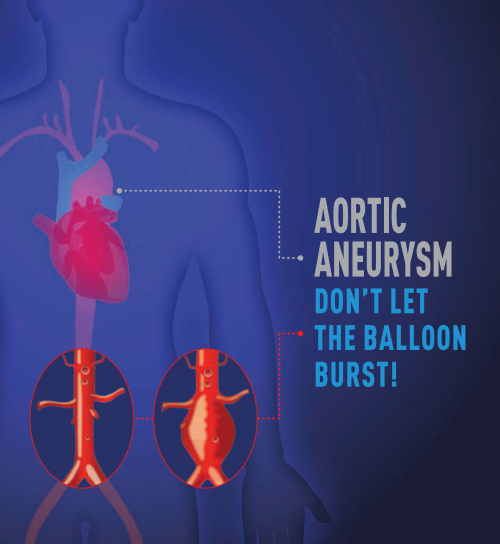
TYPES OF AORTIC ANEURYSN
- - Abdominal Aortic Aneurysm (AAA] - Involving the part of aorta in the abdominal cavity
- - Thoracic Aortic Aneurysm (TAA]- Involving the part of aorta in the chest
- - Thoraco-Abdominal Aortic Aneurysm |TAAA] - Involving parts of aorta in the chest as well as abdomen
WHO ARE AT A RISK OF HAVING AORTIC ANEURYSN? Risk Factors:
- - Old age t>60 years]
- - Tobacco consumption —smoking or chewing (Any age group]
- - High blood pressure
- - High blood cholesterol levels, obesity
WHAT ARE THE SIGNS AND SYNPTONS OF AORTIC ANEURYSN?
- - Sudden, severe abdominal pain
- - Severe back pain
- - Feeling of swelling/heaviness in stomach
- - Decreased hunger sensation/appetite The diagnosis may be confused with renal stone. gastritis. hernia or lumbar spine disease
HOW IS THE DIAGNOSIS CONFIRMED?
Consult a qualified vascular-endovascular surgeon immediately.
Investigations needed include abdominal ultrasonography/CT scan (as advised by the vascular surgeon]
WHAT HAPPENS IF THE PATIENT DOESN'T TAKE TIMELY TREATNENT?
WHAT HAPPENS IF THE ANEURYSN GETS RUPTURED BEFORE TREATEMENT?
If neglected, an aortic aneurysm can get ruptured in a process similar to an expanding balloon, leading to on-the-spot death of the patient.
The patient can even die before reaching the hospital.
TREATMENT:
Medical treatment: Patients with an aneurysm smaller than 5.5 cm in men and smaller than 5 cm in women are usually treated by medications and 6-monthly serial evaluation with CT scan. If the aneurysm is seen to be increasing in size, the patient is advised to undergo therapeutic intervention.
Who needs urgent intervention?- - Aneurysm size larger than 5.5 cm in men and larper than 5 cm in women.
- - Expanding aneurysm on serial CT scans
- - Ruptured/impeding rupture of aneurysm
LATEST TREATMENT OPTIONS:
Endovascular Aortic Repair (EVAR/TEVAR) — now considered to be the standard of care.
Procedure is performed at a dedicated vascular cath lab. It involves placement of an endovascular stent-graft through small incisions at the top of leg into the aorta. This graft covers the abnormal portion of aorta and prevents blood flow into the aneurysm. Consequently, the aneurysm gets closed and shrinks over a period of time.
As compared to open surgery, EVAR/TEVAR has a lower risk of complications and death in the short-term along with the advantage of a shorter hospital stay (3—4 days]
Source: Vascular Society of India.